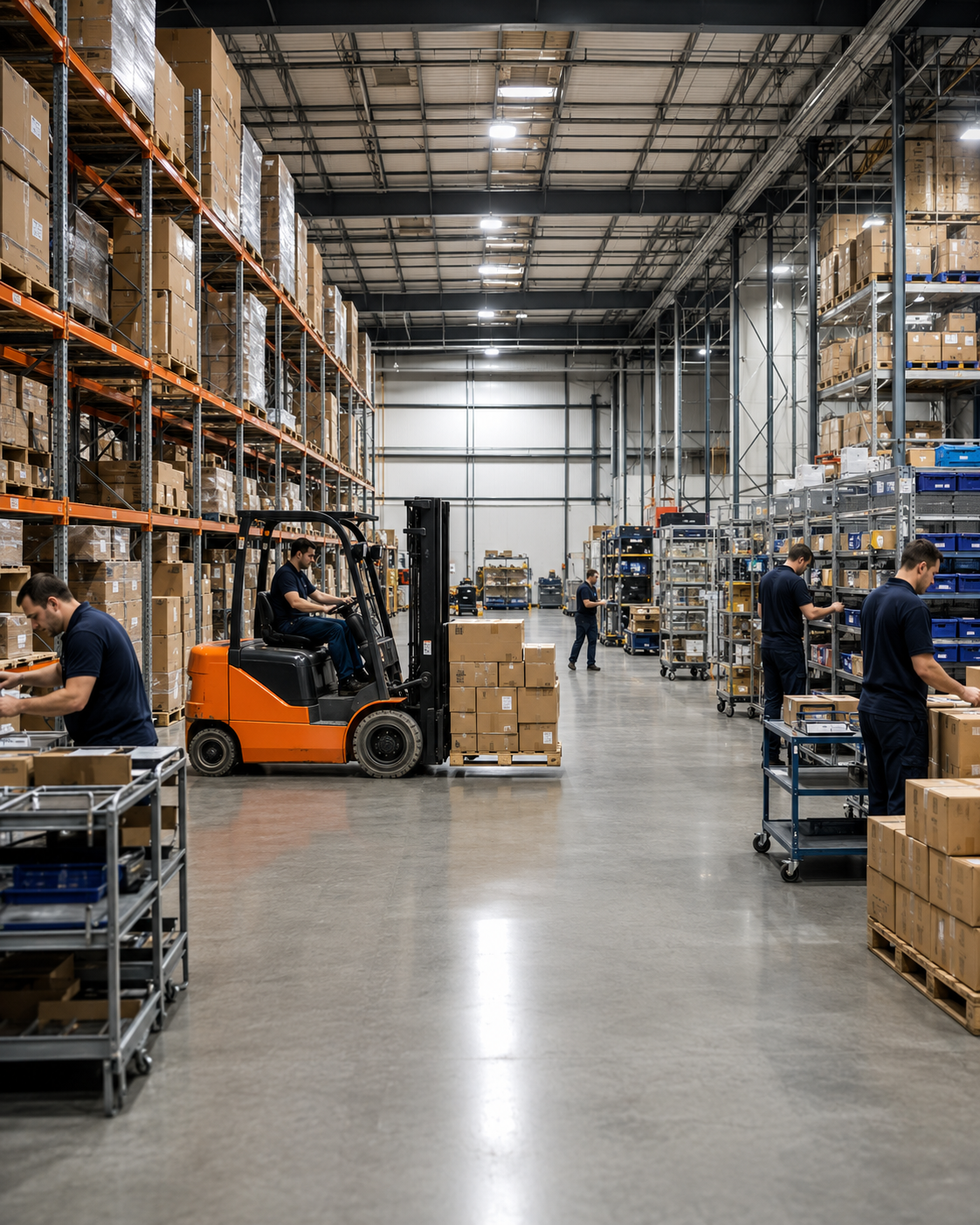
How Flexible Warehouse Contracts Support Seasonal Demand in Healthcare and Food Supply
Introduction
Flexible warehouse contracts have become an essential solution for healthcare companies, food suppliers, pharmaceutical distributors, and importers facing seasonal fluctuations in demand. As businesses across Saudi Arabia experience changing inventory requirements throughout the year, committing to long-term warehouse space can lead to unnecessary costs during slower periods or insufficient capacity during peak seasons.
Whether demand increases because of Ramadan, Hajj, government tenders, vaccination campaigns, promotional events, or seasonal food consumption, businesses need warehousing solutions that can quickly adapt to changing inventory volumes.
Instead of investing in permanent warehouse expansions or signing rigid long-term leases, many organizations are choosing flexible warehouse contracts that allow them to increase or reduce storage capacity as their operational needs change.
In this article, we’ll explore how flexible warehouse contracts work, why they are becoming increasingly popular in Saudi Arabia, and how they help healthcare and food businesses improve efficiency while maintaining a resilient supply chain.
What Are Flexible Warehouse Contracts?
Flexible warehouse contracts are warehousing agreements that allow businesses to adjust storage space, logistics services, and operational support based on actual business needs rather than committing to fixed, long-term warehouse capacity.
Unlike traditional warehouse leases, flexible contracts provide businesses with greater agility by allowing them to scale storage and logistics services up or down as demand changes.
Depending on the logistics provider, these contracts may include:
- Short-term warehouse space
- Variable storage capacity
- Inventory management
- Temperature-controlled storage
- Order fulfillment
- Pick and pack services
- Distribution support
- Cross-docking
- Returns management
- Warehouse reporting
This flexibility helps companies optimize costs while ensuring they always have sufficient warehouse capacity during busy periods.
Why Seasonal Demand Creates Warehousing Challenges
Many industries experience predictable periods of increased demand.
For healthcare companies, seasonal demand may result from:
- Influenza season
- Vaccination campaigns
- Government procurement projects
- Hospital expansion programs
- Emergency medical responses
- Public health initiatives
Food businesses often experience demand spikes during:
- Ramadan
- Hajj and Umrah seasons
- Eid holidays
- School reopening periods
- National celebrations
- Promotional campaigns
- Tourism peaks
These seasonal fluctuations create unique warehousing challenges.
During peak periods, businesses may struggle with:
- Limited warehouse space
- Inventory congestion
- Delayed order fulfillment
- Increased labor requirements
- Higher transportation demand
- Inventory visibility issues
During slower periods, companies often face the opposite problem—paying for warehouse space that is no longer fully utilized.
This imbalance makes flexible warehouse contracts an attractive solution.
The Limitations of Fixed Warehouse Agreements
Traditional warehouse leases work well for businesses with stable inventory levels throughout the year.
However, they become less efficient when storage requirements fluctuate.
Some of the most common limitations include:
Paying for Unused Space
When inventory levels decrease after seasonal demand ends, businesses continue paying for warehouse space they no longer need.
These unnecessary costs reduce overall profitability.
Limited Capacity During Peak Seasons
Fixed warehouse contracts also create challenges when inventory exceeds available storage.
Companies may need to:
- Rent temporary storage
- Delay incoming shipments
- Reduce inventory purchases
- Store products in multiple locations
Each of these solutions increases operational complexity.
Reduced Operational Flexibility
Business conditions can change quickly.
Unexpected government tenders, emergency healthcare requirements, or successful marketing campaigns may significantly increase product demand.
Traditional warehouse contracts often lack the flexibility required to respond rapidly.
How Flexible Warehouse Contracts Improve Supply Chain Performance
Businesses using flexible warehouse contracts gain access to warehousing solutions that adapt alongside changing operational requirements.
Instead of building warehouse capacity years in advance, companies can scale logistics services whenever demand changes.
Some of the most significant advantages include:
Scalable Storage Capacity
Perhaps the greatest benefit of flexible warehouse contracts is the ability to increase or decrease warehouse space as inventory volumes change.
For example:
- A pharmaceutical distributor can temporarily expand storage during vaccination campaigns.
- A food importer can secure additional warehouse space before Ramadan.
- A wellness brand can increase fulfillment capacity during promotional events.
- A medical supplier can accommodate large government contracts without investing in permanent warehouse expansion.
This scalability allows businesses to respond confidently to market opportunities.
Better Cost Control
Warehouse costs become much easier to manage when businesses pay only for the storage and logistics services they actually use.
Rather than carrying excess warehouse costs throughout the year, organizations align logistics expenses with actual inventory volumes.
This improves financial planning while preserving cash flow for other business priorities.
Faster Response to Market Changes
Markets rarely remain predictable.
Customer demand, supply chain disruptions, and healthcare requirements can all change with little warning.
Businesses using flexible warehouse contracts can respond much faster by increasing warehouse capacity without lengthy construction projects or expensive facility expansions.
Improved Business Continuity
Seasonal demand often places significant pressure on supply chains.
Flexible warehousing reduces the risk of operational disruptions by ensuring additional storage capacity is available whenever required.
This helps companies continue serving customers without interruption while maintaining high service levels.