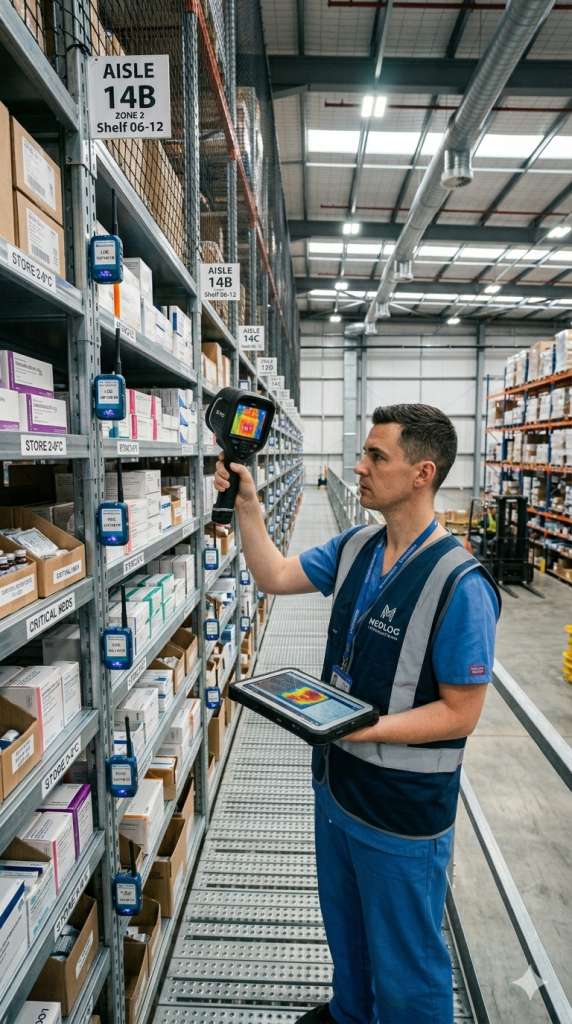
In healthcare logistics, maintaining the right environmental conditions is essential to preserving product quality and protecting patient safety. This is where thermal mapping warehouse practices become critical. Thermal mapping helps organizations understand how temperatures vary throughout a medical warehouse, ensuring that healthcare products are consistently stored within approved temperature ranges.
As pharmaceutical products, vaccines, medical devices, and other temperature-sensitive items move through increasingly complex supply chains, temperature control has become more than an operational requirement. It is now a key factor in maintaining regulatory compliance, reducing product losses, and building trust among healthcare providers and patients.
For organizations operating in Saudi Arabia’s healthcare sector, understanding the importance of thermal mapping is essential for maintaining safe and efficient warehouse operations.
What Is Thermal Mapping in Medical Warehouses?
A thermal mapping warehouse assessment is the process of measuring and analyzing temperature distribution throughout a storage facility over a defined period. The objective is to identify temperature variations and determine whether all areas within the warehouse maintain the required conditions.
Unlike routine temperature monitoring, thermal mapping provides a comprehensive picture of how environmental conditions behave under real operating circumstances.
Typically, thermal mapping evaluates factors such as:
- Temperature consistency throughout the warehouse.
- Seasonal environmental variations.
- Hot and cold spots within storage areas.
- The impact of warehouse layout and airflow.
- Temperature recovery following operational activities.
Moreover, the results help organizations optimize storage practices and improve temperature control strategies.
Why Thermal Mapping Warehouse Assessments Matter
Thermal mapping is not simply a regulatory exercise. Instead, it directly contributes to product quality, operational efficiency, and patient safety.
Protecting Product Integrity
Many healthcare products are highly sensitive to temperature fluctuations. Therefore, even minor deviations may affect their stability and effectiveness.
By identifying areas that experience temperature variations, organizations can implement corrective measures before products are compromised.
Supporting Patient Safety
Ultimately, healthcare products are intended to improve patient outcomes. Consequently, maintaining appropriate storage conditions helps ensure that products remain safe and effective when they reach end users.
This is particularly important for vaccines, injectable products, and biological materials.
Reducing Product Losses
Temperature excursions often result in inventory being quarantined or discarded. As a result, businesses may face significant financial losses.
Thermal mapping helps minimize these risks by identifying vulnerabilities before they lead to costly incidents.
Improving Operational Confidence
Furthermore, understanding how a warehouse performs under different conditions enables organizations to make informed decisions regarding storage layouts and operational procedures.
Thermal Mapping and Temperature Monitoring: What’s the Difference?
Although these terms are often used interchangeably, they serve different purposes.
Thermal mapping involves conducting detailed assessments over a specific period to validate warehouse performance and identify temperature patterns.
In contrast, temperature monitoring refers to the continuous observation of environmental conditions during daily operations.
Both processes are essential.
Thermal mapping establishes confidence that the facility can maintain required conditions, while temperature monitoring verifies that those conditions continue to be maintained over time.
Together, they create a stronger quality assurance framework.
How Thermal Mapping Supports GSDP Logistics
Good Storage and Distribution Practices (GSDP) emphasize maintaining appropriate conditions throughout the healthcare supply chain.
Therefore, thermal mapping plays an important role in supporting GSDP logistics by helping organizations:
- Validate warehouse suitability.
- Demonstrate control over storage conditions.
- Identify risks before they affect products.
- Support audit and inspection readiness.
- Strengthen quality management systems.
Additionally, documented thermal mapping activities provide valuable evidence during regulatory reviews and customer assessments.
When Should Medical Warehouses Conduct Thermal Mapping?
Thermal mapping should not be viewed as a one-time activity.
Organizations are encouraged to conduct thermal mapping:
- Before using a new warehouse.
- Following major facility modifications.
- After significant changes to storage configurations.
- When introducing new equipment.
- Periodically as part of ongoing quality programs.
By adopting a proactive approach, businesses can maintain confidence in their storage environments and continuously improve performance.
Why Choosing the Right Logistics Partner Matters
Effective temperature management requires specialized expertise, validated processes, and a commitment to quality.
Rabiyah Logistics supports healthcare organizations across Saudi Arabia through warehousing solutions designed to protect sensitive products and maintain operational excellence. By prioritizing controlled monitoring practices and robust quality systems, Rabiyah Logistics helps clients strengthen product protection and supply chain reliability.
[su_button url=”https://api.whatsapp.com/send/?phone=966540467689&text&type=phone_number&app_absent=0″ target=”blank” style=”stroked” background=”#007d8c” color=”#ffffff” size=”7″ text_shadow=”0px 0px 0px #000000″]Start Secure Storage with Rabiyah[/su_button]
Conclusion
Thermal mapping in medical warehouses is far more than a technical requirement. It is a practical tool that supports product integrity, enhances patient safety, and strengthens operational confidence.
As Saudi Arabia’s healthcare sector continues to evolve, organizations that invest in thermal mapping warehouse assessments and effective temperature monitoring practices will be better positioned to reduce risks, improve compliance readiness, and deliver high-quality healthcare products safely and efficiently.
Ultimately, understanding how temperatures behave within a warehouse environment is a critical step toward protecting the products that patients depend on every day.