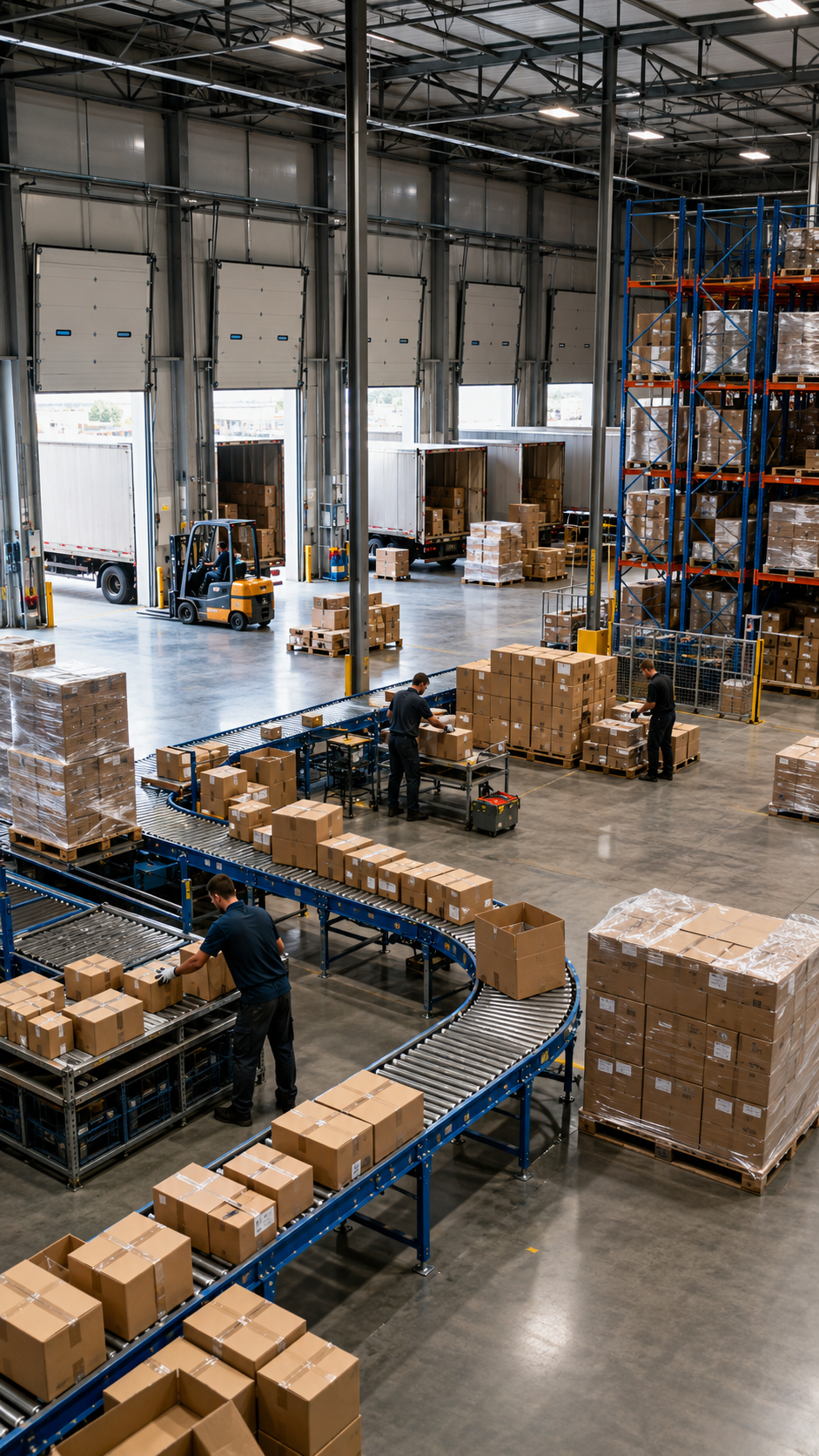
How Shipment Consolidation Helps Reduce Cost and Improve Delivery Efficiency
Shipment consolidation is an important logistics method that helps businesses improve the use of their resources and reduce the costs linked to movement and distribution. In many cases, the issue is not only about having warehouse space or transport access. It is also about organizing shipments in a way that makes delivery more efficient and less wasteful. When orders or outbound shipments are combined in a structured model, movement becomes clearer and businesses can make better use of time, transport capacity, and operating effort.
In the Saudi market, this approach is becoming more important as healthcare, food, retail, and commercial sectors continue to expand. Businesses that depend on recurring shipments or multiple destinations can benefit strongly from this model because it supports not only lower cost, but also smoother and more organized daily operations. That is why shipment consolidation has become a practical part of modern logistics planning.
Rabiyah Logistics provides services that include storage for medical devices and supplies, storage for human and veterinary medicines, e-commerce services, storage for herbal and health products, storage for cosmetics, logistics transportation, shipment consolidation, food and supplement storage, and order preparation. Through these services, improving distribution efficiency becomes a central part of supporting clients across multiple sectors.
What Shipment Consolidation Means
Shipment consolidation means organizing multiple orders or outbound shipments into a more efficient shared movement model instead of handling each shipment separately every time. The goal is not just combining. It is improving execution.
Shipment consolidation improves movement structure
When shipments are grouped within a clearer route, timing, or transport plan, operations become less fragmented and coordination becomes easier between warehousing, preparation, and delivery.
Shipment consolidation improves resource use
Better use of transport capacity, working time, and available space makes the logistics model more efficient and lowers unnecessary operating waste.
Shipment consolidation supports better operational clarity
The clearer the shipping structure becomes, the easier it is for both the business and the logistics partner to track movement and plan effectively.
How Shipment Consolidation Helps Reduce Cost
One of the biggest reasons businesses focus on this model is its direct effect on operating cost.
Shipment consolidation reduces the number of trips
When orders are organized in a way that allows multiple shipments to move more efficiently together, the number of separate trips becomes lower along with the related cost.
Shipment consolidation improves transport utilization
Better use of vehicles and transport capacity means operational value is not wasted on small or poorly organized shipment flow that could have been combined more effectively.
Shipment consolidation lowers indirect cost
As the process becomes more organized, businesses lose less time, reduce repeated coordination effort, and avoid extra cost created by weak planning.
How Shipment Consolidation Improves Delivery Efficiency
The effect is not limited to cost reduction. It also improves service speed, quality, and overall structure.
Shipment consolidation supports organized delivery
When shipments are better arranged, delivery execution becomes clearer and less exposed to unnecessary overlap or delay.
Shipment consolidation improves planning
A clearer outbound model supports better timing expectations and improves the quality of daily distribution planning.
Shipment consolidation improves workflow consistency
The less fragmented movement becomes, the easier it is to maintain a service model that is reliable and repeatable over time.
Where Shipment Consolidation Creates the Most Value
This method can benefit many sectors, but it becomes especially valuable in environments that depend on recurring shipments, multiple destinations, or time-sensitive movement.
Shipment consolidation in healthcare-related sectors
Businesses and facilities handling medical products often need organized and precise movement, and this model helps improve how distribution is planned and executed.
Shipment consolidation in food and supplement supply
In food-related sectors, better shipment organization can help reduce waste and improve how products move across multiple delivery points.
Shipment consolidation in e-commerce
Businesses with recurring order flow benefit from logistics models that make preparation and outbound movement more integrated and efficient.
Other Operational Benefits
Beyond lowering cost and improving delivery, there are other practical reasons why this model becomes more valuable as businesses grow.
Shipment consolidation supports flexibility
When logistics operations are more organized, companies are better able to adapt to changes in volume, timing, or delivery destinations.
Shipment consolidation improves visibility
Better movement structure helps businesses track operations more clearly and supports stronger planning and performance review.
Shipment consolidation reduces internal pressure
Less repeated coordination and fewer unnecessary transport actions reduce the burden on operational and administrative teams.
What Businesses Should Look for in a Logistics Partner
Not every logistics model creates the same value. Businesses need a partner that can implement this service in a practical and structured way.
Shipment consolidation requires strong organization
Success here depends on clear warehousing, strong order preparation, and effective coordination between different outbound shipments.
Shipment consolidation requires flexibility
Every business has its own order pattern, so the partner should be able to adapt rather than force one rigid service model.
Shipment consolidation requires clear communication
The clearer the communication becomes, the easier it is to align shipping plans with actual business needs.
Why Businesses Choose Rabiyah Logistics
Rabiyah Logistics understands that shipment consolidation is not just a simple operating step. It is a real tool for improving efficiency, reducing waste, and strengthening distribution quality. That is why we support businesses through warehousing, transportation, and fulfillment services that help organize movement more effectively within the Saudi market.
Through our experience in medical and food storage, logistics transportation, order preparation, and shipment consolidation, we support businesses looking for a partner that can help build a more flexible, stable, and efficient distribution model.
Final Thoughts
Shipment consolidation helps businesses reduce cost and improve delivery efficiency by organizing movement more effectively, making better use of available resources, and reducing unnecessary operating steps. The more clearly this model is implemented, the more stable and scalable the logistics operation becomes.
With a partner such as Rabiyah Logistics, businesses in Saudi Arabia can use this method to improve distribution performance and build a more efficient supply chain.