How Technology (WMS, Inventory Tracking, Temperature Monitoring) Is Transforming Distribution Services
Modern distribution technology is becoming a key driver of better logistics performance, especially in sectors that depend on speed, accuracy, and strong operational visibility. Distribution services are no longer shaped only by storage, transportation, and order preparation in the traditional sense. They are now increasingly connected to smarter systems that help manage warehouses, monitor stock movement, and control storage and transport conditions more effectively.
In the Saudi market, this shift matters even more as healthcare, food, and commercial sectors continue to grow and client expectations continue to rise. Businesses now want faster execution, better accuracy, and clearer information across every logistics stage. When technology becomes part of daily operations, the gap between storage, preparation, and final movement becomes smaller. That is why understanding the effect of modern distribution technology is important for companies that want to improve performance and prepare for future logistics demands.
Rabiyah Logistics provides services that include storage for medical devices and supplies, storage for human and veterinary medicines, e-commerce services, storage for herbal and health products, storage for cosmetics, logistics transportation, shipment consolidation, food and supplement storage, and order preparation. As these services continue to develop, technology has become an important part of improving operational efficiency.
Why Modern Distribution Technology Matters
Technology helps logistics operations become clearer, more controlled, and more reliable. This directly affects service quality and the ability to reduce avoidable mistakes.
Modern distribution technology supports accuracy
The clearer the movement and the stronger the tracking, the more accurate operational decisions become across warehousing and distribution stages.
Modern distribution technology improves speed
Better systems reduce time lost in searching, manual coordination, and unclear follow-up. This supports faster execution throughout the workflow.
Modern distribution technology improves visibility
When businesses can see stock movement, product conditions, and order status more clearly, logistics management becomes easier and more dependable.
The Role of Warehouse Management Systems
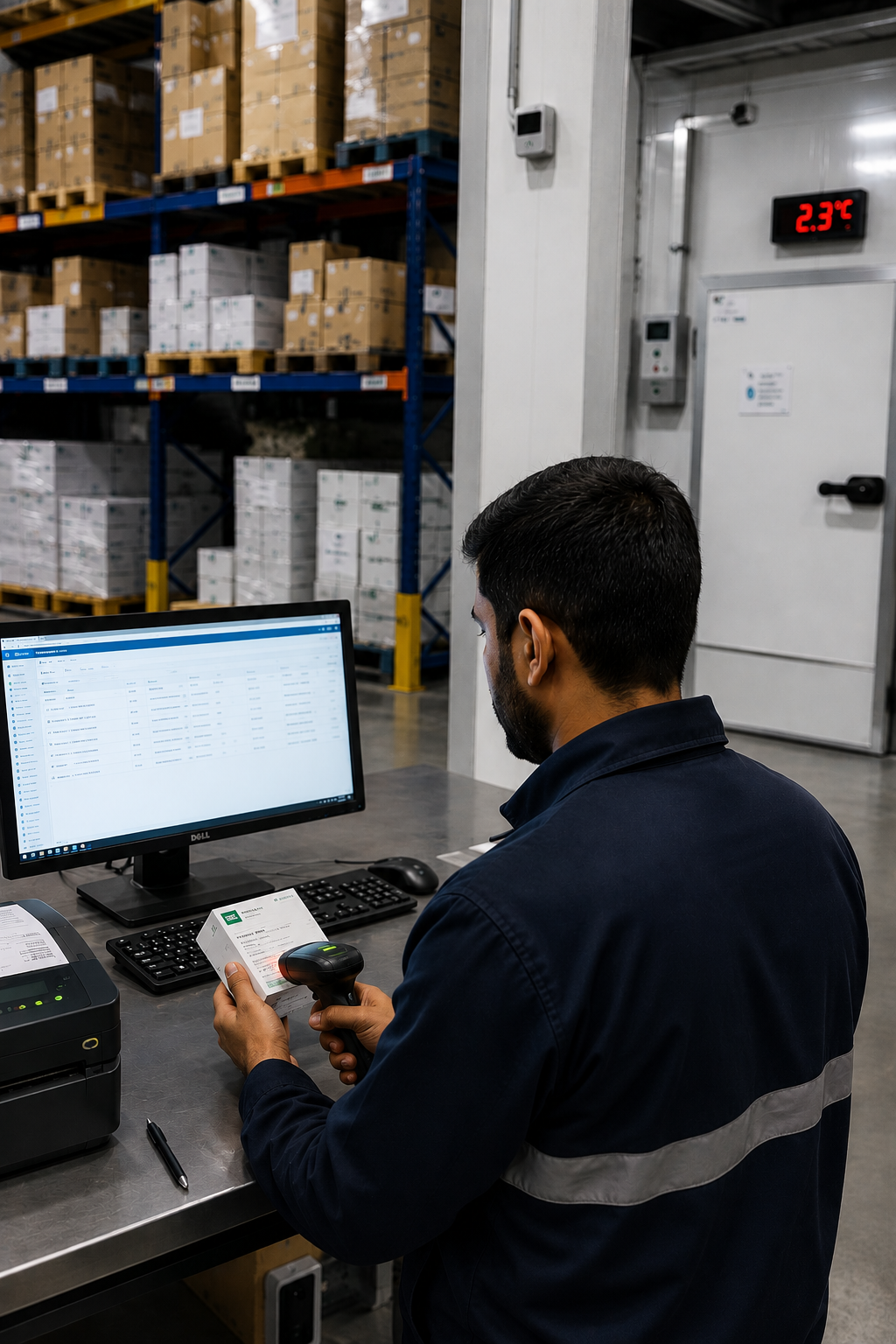
Warehouse management systems are among the most important tools changing how logistics operations are structured today.
Modern distribution technology starts in the warehouse
A warehouse supported by stronger systems makes it easier to identify product locations, improve space usage, and speed up picking and preparation.
Warehouse systems reduce errors
The clearer and more system-based warehouse operations become, the lower the chance of mistakes in product handling or order preparation.
Warehouse systems improve workflow
When warehouse activity is better organized, movement from receiving to storage to fulfillment becomes smoother and more efficient.
How Inventory Tracking Is Changing Logistics
Inventory tracking is no longer a secondary function. It has become a major part of logistics quality and daily operational control.
Modern distribution technology improves stock visibility
When stock is tracked more accurately, businesses gain a clearer understanding of available quantities, movement flow, and where support is needed most.
Inventory tracking supports better planning
Clear movement data helps improve forecasting and reduces the risk of sudden shortages or unnecessary stock buildup.
Inventory tracking strengthens trust
Companies and clients are more confident when they can work within an environment that gives clearer information about stock and order conditions.
Why Temperature Monitoring Matters
In sectors handling medical, food, and health-related products, temperature monitoring becomes an important part of quality control.
Modern distribution technology protects sensitive goods
Temperature monitoring helps maintain more suitable conditions for products that require greater stability during storage or movement.
Temperature monitoring supports discipline
The more clearly storage and transport conditions are monitored, the easier it becomes to maintain a more stable level of quality across distribution stages.
Temperature monitoring reduces risk
Having visibility into storage and movement conditions helps reduce problems linked to handling sensitive product categories.
How Technology Improves Distribution Services
The improvement is not limited to one function. It appears across the full operating model.
Modern distribution technology improves efficiency
When systems, tracking, and monitoring work together, the service becomes faster, more organized, and less exposed to operational gaps.
Modern distribution technology supports faster response
Better data and better movement visibility help businesses respond more effectively to daily and changing logistics needs.
Modern distribution technology reduces manual pressure
The more operations rely on system-based control, the lower the pressure created by repeated manual coordination and fragmented follow-up.
What Businesses Look for in Technology Solutions
Companies are not only looking for new tools. They are looking for practical systems that provide visible value in daily operations.
Modern distribution technology with ease of use
A good system should be clear and practical so that it supports operations rather than adds complexity.
Modern distribution technology with stronger accuracy
The purpose of these tools is to reduce errors and improve the visibility of movement, stock, and order handling.
Modern distribution technology with scalability
The more adaptable the system is, the more able it becomes to support businesses as their needs grow and market conditions change.
Why Businesses Choose Rabiyah Logistics
Rabiyah Logistics understands that the future of distribution does not depend only on traditional infrastructure. It also depends on how technology is used to improve storage, track inventory, organize movement, and support sensitive products more effectively. That is why we continue building a logistics environment that offers stronger clarity and higher efficiency for businesses in Saudi Arabia.
Through our experience in medical and food storage, transportation, shipment consolidation, and order preparation, we support companies looking for a logistics partner that combines practical structure with continuous development.
Final Thoughts
Modern distribution technology is reshaping logistics services by making operations more accurate, more efficient, and easier to manage. Through warehouse systems, inventory tracking, and temperature monitoring, distribution services become stronger in both quality and operational stability.
With a partner such as Rabiyah Logistics, businesses can benefit from this progress and build a distribution model that is more capable of meeting current demands and future expectations.