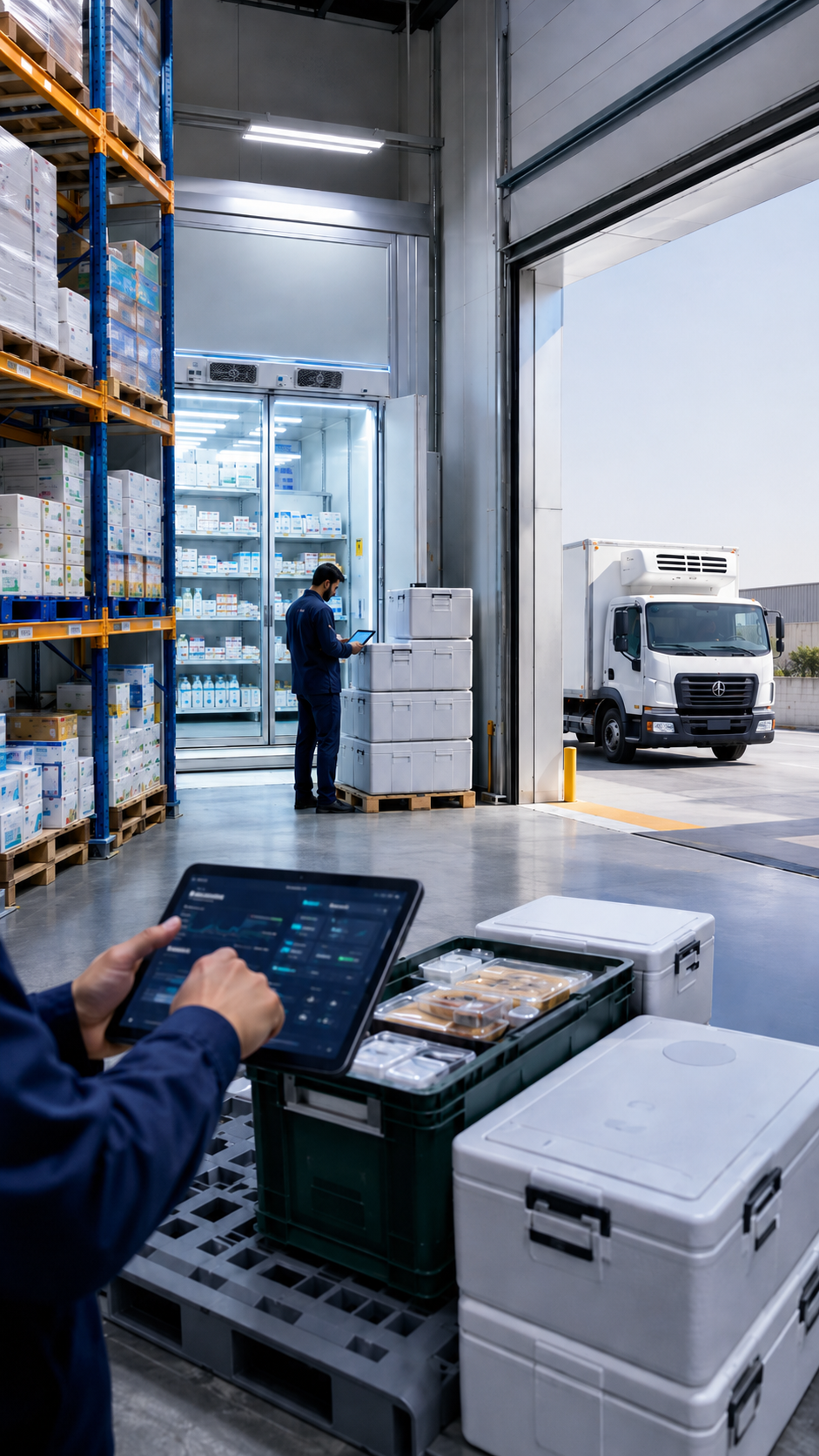
The Future of Medical & Food Logistics in Saudi Arabia: Trends for 2026+
Medical food logistics in Saudi Arabia is moving toward a more advanced and more responsive model. As healthcare providers, food businesses, distributors, and e-commerce operations continue to grow, logistics expectations are also changing. Companies no longer look only for storage and transport. They want stronger cold-chain control, better inventory visibility, and faster delivery systems that support continuity and service quality.
This shift is especially important in sectors where timing, product condition, and stock accuracy directly affect operations. Medical products often require careful handling and organized movement. Food products and supplements also depend on proper storage, reliable distribution, and consistent order flow. That is why the future of medical food logistics is increasingly linked to integrated systems rather than isolated logistics functions.
For Saudi Arabia, the direction ahead points toward more digital operations, stronger warehouse efficiency, faster movement between storage and destination points, and better support for sensitive products. Rabiyah Logistics supports this future through services that include storage for medical devices and supplies, storage for human and veterinary medicines, e-commerce services, storage for herbal and health products, storage for cosmetics, logistics transportation, shipment consolidation, food and supplement storage, and order preparation.
Why Medical Food Logistics Is Changing
The logistics environment is changing because client expectations are changing. Businesses want more visibility, more speed, and more confidence in how products move across the supply chain.
Logistics now depends on precision
Medical and food-related products require a level of operational control that goes beyond basic warehousing. Accuracy in storage, movement, and order preparation matters more than ever.
Logistics is becoming more time-sensitive
Faster delivery is no longer just a competitive advantage. In many cases, it has become part of business continuity. Healthcare and food operations both depend on timely product availability.
Logistics is becoming more connected
Warehousing, inventory, transport, and fulfillment are increasingly expected to work together as one system. This is why future logistics growth depends on integration.
Cold-Chain Will Play a Bigger Role
One of the clearest future trends is the growing importance of cold-chain logistics. Sensitive medical items, some health products, and selected food categories need more than normal storage and transport conditions.
Logistics needs stronger temperature control
Cold-chain systems help businesses maintain product condition across storage and movement stages. This is especially important when products must remain stable through every logistics step.
Logistics benefits from better handling discipline
Cold-chain operations often improve overall logistics discipline because they require stronger process control, better planning, and clearer movement timing.
Logistics supports sensitive categories
As Saudi Arabia’s healthcare and food sectors continue to develop, the need for structured support for temperature-sensitive items is likely to become more important.
Digital Inventory Will Become a Core Standard
Another major trend is the shift toward digital inventory systems. In the future, logistics performance will depend increasingly on visibility and accuracy.
Logistics needs real-time stock visibility
Businesses want to know what is available, where it is stored, and how quickly it can move. Digital inventory systems help improve that visibility and support stronger planning.
Logistics improves through better tracking
Digital tools make it easier to track stock movement, support replenishment decisions, and reduce avoidable errors in warehousing and order preparation.
Logistics benefits from clearer forecasting
When inventory systems are more accurate, companies are in a better position to understand demand patterns and plan more effectively.
Fast Delivery Will Shape Client Expectations
Speed is becoming one of the defining factors in logistics quality. As supply chains become more active and customer expectations rise, fast delivery will continue to shape the sector.
Logistics supports operational readiness
Hospitals, clinics, retailers, and distributors all benefit when products arrive quickly and reliably. Fast delivery supports continuity and reduces disruption.
Logistics helps reduce pressure
When delivery is organized and timely, businesses spend less time dealing with shortages, emergency replacements, or repeated follow-up.
Logistics strengthens service quality
Faster delivery often improves the overall client experience, whether the end user is a healthcare provider, a retail operation, or an e-commerce customer.
Warehouses Will Become Smarter and More Specialized
Future logistics growth will also depend on the role of the warehouse itself. Warehouses are becoming more than storage spaces. They are becoming active control points for supply chain performance.
Logistics needs smarter storage systems
Better warehouse layout, organized zones, and stronger product categorization help improve picking speed, reduce confusion, and support more reliable fulfillment.
Logistics benefits from category-based storage
Medical supplies, medicines, food products, supplements, and cosmetics all have different operational needs. Smarter warehousing means handling these categories with more structure.
Logistics supports faster order preparation
A more efficient warehouse directly improves order preparation, shipment handling, and outbound movement.
E-Commerce Will Continue to Influence Logistics
The future of logistics in Saudi Arabia is also tied to the growth of e-commerce and direct fulfillment models.
Medical food logistics now includes fulfillment speed
Clients increasingly expect logistics partners to support not only storage but also faster and more accurate order preparation.
Medical food logistics requires flexible operations
As ordering patterns change, logistics systems need to be more responsive and better able to handle recurring, urgent, or variable order flow.
Medical food logistics benefits from integrated support
Storage, picking, packing, and transport work better when handled through a connected system rather than separate processes.
What Businesses Will Look for in 2026+
Companies in healthcare, food, and related sectors are likely to place more attention on practical logistics value.
Medical food logistics with reliability
Businesses will continue to prioritize partners that can deliver consistent service, not just broad service lists.
Medical food logistics with visibility
Clear communication, stock visibility, and delivery transparency will become even more important in future logistics partnerships.
Medical food logistics with adaptability
As market needs evolve, businesses will want logistics partners that can scale, respond, and support changing operational models.
Why This Matters in Saudi Arabia
Saudi Arabia continues to develop as a major regional market for healthcare, food, and commercial growth. As these sectors evolve, logistics expectations will continue rising.
Medical food logistics supports market growth
Better logistics systems help businesses expand more confidently and operate with stronger continuity.
Medical food logistics supports sector stability
Reliable storage, delivery, and inventory systems reduce operational risk and improve day-to-day stability.
Medical food logistics supports long-term competitiveness
Companies that strengthen logistics performance are often better positioned to compete in demanding sectors.
Why Businesses Choose Rabiyah Logistics
Rabiyah Logistics understands that the future of medical food logistics depends on more than transport alone. It depends on organized storage, stronger cold-chain capability, better inventory visibility, faster delivery support, and practical fulfillment services.
With experience in medical storage, pharmaceutical storage, food and supplement storage, logistics transport, shipment consolidation, and order preparation, Rabiyah Logistics supports businesses that need structured and dependable logistics solutions in Saudi Arabia.
Final Thoughts
The future of medical food logistics in Saudi Arabia is moving toward smarter systems, stronger cold-chain support, better digital inventory, and faster delivery performance. These trends are not only about innovation. They are about building more reliable and more efficient supply chains for sectors that depend on stability every day.
For businesses preparing for 2026 and beyond, logistics will be more than a support function. It will be a strategic advantage. With the right partner, such as Rabiyah Logistics, companies can build a logistics model that is ready for growth, speed, and changing market expectations.