Introduction
Maintaining appropriate storage temperatures is one of the most important responsibilities in pharmaceutical and healthcare logistics. Medicines, vaccines, diagnostic materials, and other temperature-sensitive medical products may lose their quality or effectiveness when exposed to unsuitable environmental conditions.
In Saudi Arabia, where high outdoor temperatures can place additional pressure on storage facilities and transportation operations, maintaining controlled warehouse environments is particularly important.
However, installing air-conditioning systems and temperature monitoring devices is not enough to guarantee uniform storage conditions throughout a warehouse.
Different areas within the same facility may experience variations in temperature due to airflow patterns, shelving arrangements, loading activities, and equipment placement.
This is where temperature mapping becomes essential.
Temperature mapping helps warehouse operators identify temperature variations, assess storage conditions, and establish appropriate monitoring procedures to protect healthcare products.
1. What Is Temperature Mapping in Medical Warehouses?
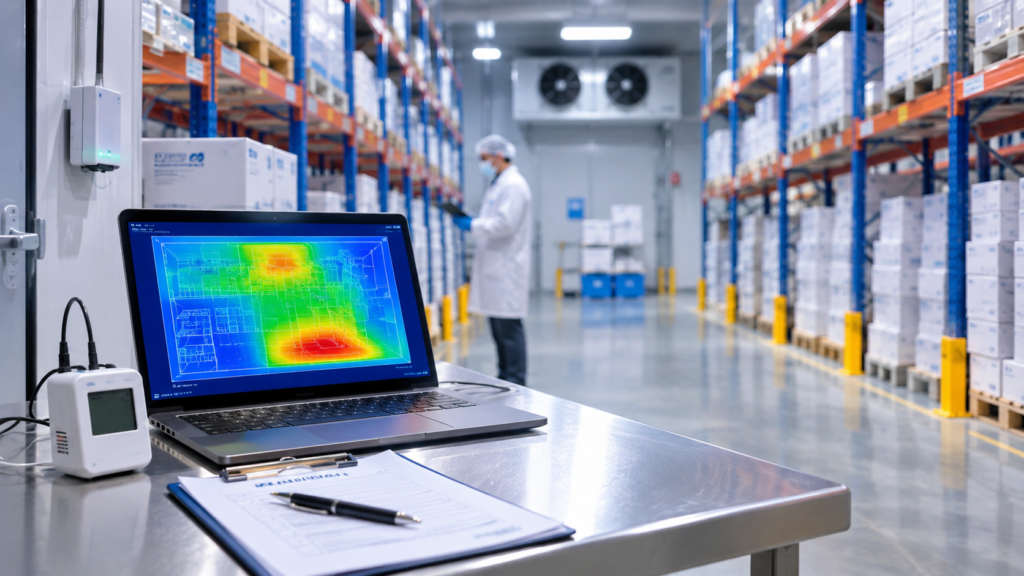
Temperature mapping is a documented process used to measure and evaluate temperature distribution across different locations within a storage facility.
The process typically involves placing calibrated temperature data loggers at selected points throughout the warehouse and collecting measurements over a defined period.
The recorded data helps identify areas that experience higher or lower temperatures, as well as locations where temperature fluctuations are more significant.
For example, areas near loading doors may experience greater temperature changes when doors are opened frequently, while certain corners or elevated shelving positions may have different airflow conditions.
By understanding these variations, warehouse operators can determine whether storage areas consistently maintain the temperature ranges required for their products.
Temperature mapping also helps identify suitable locations for permanent monitoring sensors.
2. Why Temperature Mapping Is Important for Pharmaceutical Safety
Pharmaceutical products are developed and tested under specific quality requirements, including appropriate storage conditions.
Exposure to temperatures outside the approved range may affect product stability, potentially reducing effectiveness or altering product quality.
Some medicines require refrigerated storage, while others must remain within controlled room-temperature conditions.
The appropriate temperature range depends on the individual product and its approved storage instructions.
Temperature mapping supports pharmaceutical safety by helping facilities identify environmental risks before they affect stored inventory.
It also provides documented evidence that warehouse conditions have been evaluated.
For healthcare supply chains, this contributes to product quality assurance and supports the safe distribution of medicines to hospitals, pharmacies, and healthcare providers.
3. Temperature Mapping vs. Continuous Temperature Monitoring
Although temperature mapping and temperature monitoring are closely related, they serve different purposes.
Temperature mapping evaluates how temperatures vary across a warehouse under defined conditions.
Continuous temperature monitoring, on the other hand, tracks temperature readings at designated locations during routine operations.
Mapping helps determine where monitoring sensors should be positioned to detect potential temperature problems.
For example, a warehouse may have a temperature sensor near its central aisle. However, mapping could reveal that the highest temperatures occur near the ceiling or in an area exposed to frequent door openings.
Without mapping, the central sensor might not detect these variations.
Therefore, temperature mapping and continuous monitoring should work together as part of an effective environmental control system.
4. How Temperature Mapping Is Conducted
A successful temperature mapping study requires planning, appropriate equipment, accurate documentation, and careful evaluation.
Step 1: Assess the warehouse layout
The first step involves reviewing the facility’s dimensions, storage arrangements, doors, ventilation systems, and areas that may be exposed to temperature fluctuations.
Step 2: Develop a mapping plan
A documented protocol should define the study objectives, temperature limits, logger locations, measurement intervals, study duration, and acceptance criteria.
Step 3: Position calibrated data loggers
Temperature data loggers are distributed across representative locations, including areas near doors, corners, high shelving positions, and other potentially vulnerable zones.
Step 4: Record temperature measurements
Measurements are collected over the planned period. Depending on the facility and study objectives, mapping may be conducted under loaded, empty, or different seasonal operating conditions.
Step 5: Analyze the results
Collected data is evaluated to identify temperature patterns, hot spots, cold spots, and any excursions beyond acceptable limits.
Step 6: Document findings and corrective actions
The final report should summarize the methodology, results, deviations, conclusions, and any necessary corrective measures.
This systematic approach helps warehouse operators understand the environmental performance of their facilities.
5. Common Temperature Risks in Medical Warehouses
Several factors can contribute to temperature instability within pharmaceutical storage facilities.
One common risk is frequent opening of loading bay doors, which allows outside air to enter controlled environments.
In Saudi Arabia, this can be especially significant during periods of extreme summer heat.
Other potential risks include:
- Uneven airflow caused by shelving or product placement.
- Inadequate insulation around doors and walls.
- Poorly positioned temperature sensors.
- Malfunctioning cooling equipment.
- Overcrowded storage areas.
- Interruptions to electricity or cooling systems.
- Heat generated by warehouse equipment.
These factors can create localized temperature differences even when the overall warehouse appears adequately cooled.
Temperature mapping helps identify such risks and supports targeted corrective actions.
6. Temperature Mapping and Cold Chain Logistics
Cold chain logistics involves maintaining products within their required temperature ranges throughout storage, handling, and transportation.
Vaccines, certain biological medicines, and other refrigerated healthcare products may require particularly strict temperature controls.
A temperature excursion during storage can affect product quality and may require the affected stock to be quarantined until its suitability is assessed.
Temperature mapping plays an important role in cold chain warehousing by evaluating whether refrigerated rooms and other controlled storage areas maintain appropriate conditions.
It also supports decisions regarding storage locations, sensor placement, and equipment performance.
However, warehouse temperature mapping does not replace the qualification of refrigerated vehicles, shipping containers, or other transportation equipment.
Each stage of the cold chain requires appropriate controls to protect products throughout distribution.
7. Regulatory Requirements in Saudi Arabia
Pharmaceutical storage and distribution activities in Saudi Arabia are regulated by the Saudi Food and Drug Authority (SFDA).
The SFDA’s Good Storage and Distribution Practices guidance emphasizes maintaining appropriate storage conditions and monitoring environmental parameters that may affect product quality.
Temperature mapping is an important element of establishing and verifying suitable conditions in temperature-controlled storage areas.
Businesses should maintain appropriate documentation, calibrated monitoring equipment, and procedures for responding to temperature deviations.
Temperature mapping studies should be conducted according to applicable requirements and a risk-based plan, including reassessment when significant changes occur to the facility or environmental control systems.
For pharmaceutical businesses, these measures support regulatory compliance, operational consistency, and product protection.
8. When Should Temperature Mapping Be Repeated?
Temperature mapping should not be viewed as a one-time activity.
A warehouse’s temperature distribution can change when equipment, storage arrangements, or operating conditions are modified.
Reassessment may be necessary after:
- Installing or replacing cooling equipment.
- Changing warehouse layouts or shelving arrangements.
- Expanding storage capacity.
- Modifying ventilation or airflow systems.
- Identifying unexplained temperature excursions.
- Making significant changes to loading or operational procedures.
Seasonal variations may also need to be considered, particularly in climates with substantial differences between summer and winter conditions.
The appropriate frequency of remapping should be determined by applicable regulations, quality procedures, and documented risk assessments.
9. Business Benefits of Effective Temperature Mapping
Beyond product safety and regulatory considerations, temperature mapping can provide operational and financial benefits.
Identifying environmental weaknesses early may reduce the risk of damaged inventory, product disposal, and unexpected supply disruptions.
Accurate mapping also supports better decisions about equipment maintenance, storage layouts, and monitoring system design.
For pharmaceutical distributors, improved temperature control can strengthen customer confidence and support reliable order fulfillment.
It may also help businesses use storage space more effectively by identifying areas suitable for specific product categories.
Ultimately, temperature mapping contributes to more predictable warehouse operations and stronger supply chain resilience.
10. The Role of Logistics Partners in Temperature-Controlled Warehousing
Choosing a logistics partner capable of supporting appropriate environmental controls is essential for businesses handling temperature-sensitive healthcare products.
Companies should evaluate the provider’s storage infrastructure, temperature monitoring procedures, documentation practices, and ability to respond to environmental deviations.
At Rabiyah Logistics, the importance of dependable warehousing and coordinated healthcare logistics reflects the need to protect product quality throughout the supply chain.
For pharmaceutical and medical suppliers, combining suitable storage facilities with documented environmental controls and effective inventory management helps support reliable distribution.
A well-managed logistics operation should prioritize product integrity, operational visibility, and the requirements of each product category.
Conclusion
Temperature mapping is an essential tool for understanding and managing environmental conditions in medical warehouses.
By identifying temperature variations, supporting monitoring sensor placement, and guiding corrective actions, it helps businesses protect sensitive healthcare products.
For pharmaceutical companies operating in Saudi Arabia, effective temperature mapping is particularly valuable given the country’s demanding climate and the importance of maintaining reliable healthcare supply chains.
When combined with continuous monitoring, trained personnel, documented procedures, and appropriate storage infrastructure, temperature mapping supports safer and more efficient pharmaceutical logistics.